
Biology Minor
Build a well-rounded understanding of life, from single-celled bacteria to multicellular plants, animals, and humans.
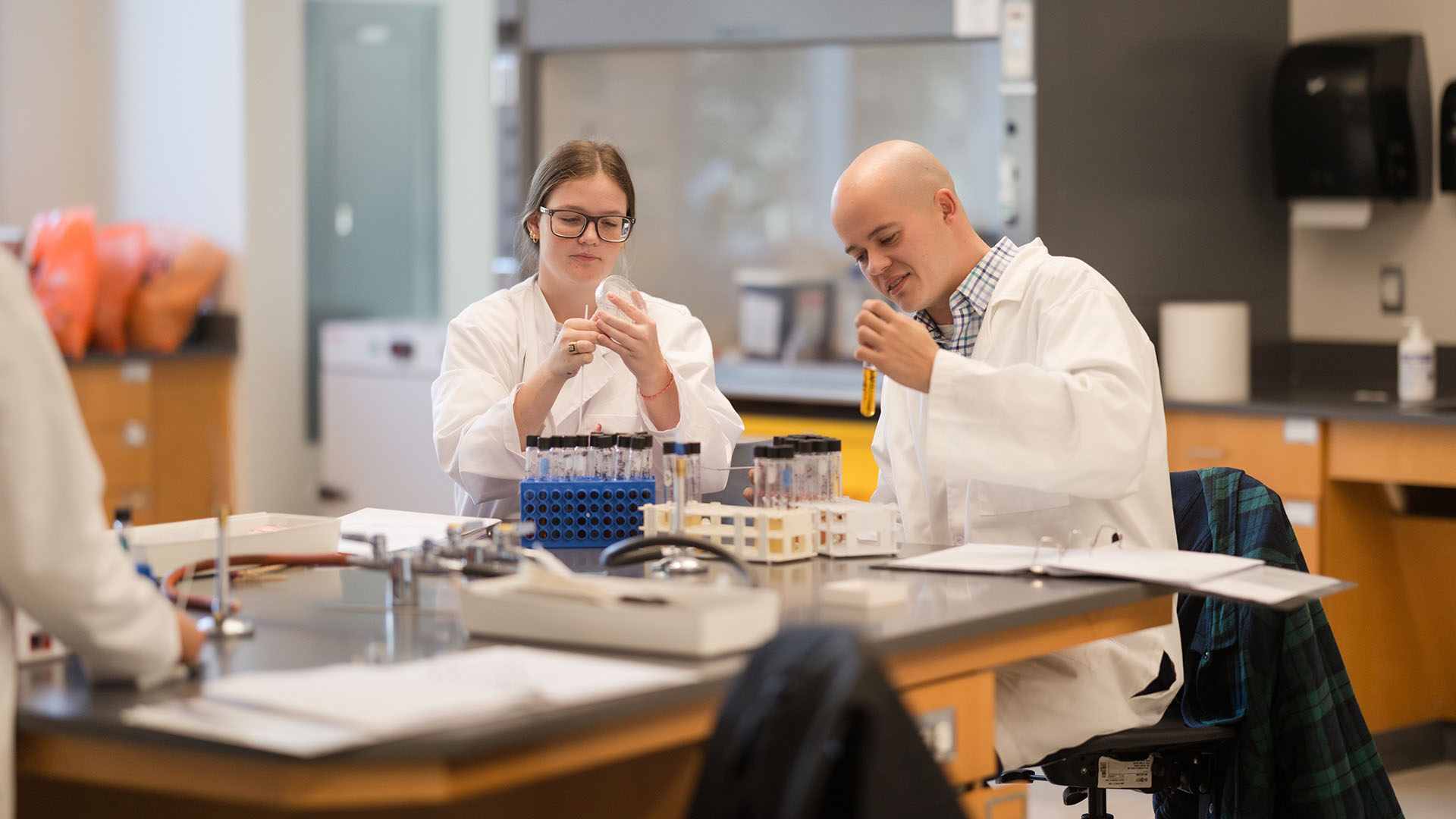
Study living systems. Build laboratory skills. Add science to your degree.
Degree: Minor
Total Credit Hours: 20
Open to: Non-Biology majors
Why Add a Biology Minor?
Designed for non-Biology majors, the Biology Minor provides a strong foundation in cell biology, organismal biology, and scientific inquiry. Students build knowledge that complements health sciences, environmental studies, public health, psychology, education, and other pre-professional or science-related programs.

Access to Upper-Level Biology Courses
The minor creates a route into advanced Biology coursework for students in other majors. Students who complete BIOL 150 and BIOL 160 meet the Biology prerequisites for courses such as Genetics, Marine Biology, Neurobiology, Conservation Biology, and Anatomy and Physiology, although additional prerequisites may apply.

Internship Access Across the Berkshires and Beyond
Biology minor students can earn internship credit through placements developed with the Biology Department. Students earn one credit for every 45 hours of on-site work, and up to 15 internship credits can count toward graduation requirements. Established sites include Berkshire Health Systems, Berkshire Medical Center, and the Berkshire Museum.

A Pre-Health Foundation for Any Major
Students in any major can use the Biology Minor to build a strong foundation in health-related and life science studies. BIOL 150 provides access to Anatomy and Physiology I and Neurobiology and begins the course sequence toward Pharmacology, Microbiology, and Immunology.
Biology Minor Requirements
The Biology Minor requires 20 credits. Students complete two introductory courses and 12 additional credits in Biology, including at least one course at the 300 level or above.
- BIOL 100: Concepts in Biology, 4 credits or BIOL 150: Introduction to Biology I: Cells, 4 credits
- BIOL 160: Introduction to Biology II: Organisms, 4 credits
- Twelve credits of BIOL courses at the 200 level or above, including at least one course at the 300 level or above
Elective courses available:
- BIOL 240: Genetics
- BIOL 320: Microbiology
- BIOL 324: Marine Biology
- BIOL 341: Conservation Biology
- BIOL 342: Anatomy and Physiology I
- BIOL 484: Biomechanics
How to Add the Biology Minor
Enrolled MCLA students should meet with their academic advisor and a Biology faculty member to plan the required courses and electives. Students must also complete a Change of Major/Minor form to officially declare the minor.
Who Can Add the Biology Minor?
The Biology Minor is designed for students majoring in another field. It is especially relevant to students preparing for medicine, veterinary medicine, pharmacy, education, laboratory work, government service, and other health, environmental, or scientific careers.
Environmental Studies: Environmental Studies students deepen their understanding of organisms, ecosystems, biodiversity, and biological processes through laboratory and field-based coursework.
Public Health and Community Health Education: Public Health and Community Health Education students strengthen the biological science component of their training, supporting their understanding of human health, disease, environmental conditions, and population health.
Psychology: Psychology students interested in neuroscience, clinical psychology, or health-related fields can strengthen their biological science foundation through courses such as Neurobiology, Anatomy and Physiology, and Genetics.
Skills You Will Develop
Spotlight Courses


Faculty
Meet Your Mentors


FAQs
Transfer courses may count if they were completed at an accredited institution with a grade of C- or higher and are comparable to MCLA coursework. The Registrar and Biology Department determine how accepted credits apply to the minor.
The introductory sequence spans at least two semesters because students complete BIOL 100 or BIOL 150 before BIOL 160. The full minor may take longer depending on elective prerequisites, course availability, and the requirements of the student’s primary major.
Students may pursue both minors if they complete the requirements for each. They should work with their academic advisor to plan the course sequence and confirm how any shared or related courses will be applied.
Not by itself. The minor provides a strong biological science foundation, but medical schools commonly require additional coursework in chemistry, physics, mathematics, and other subjects. Students should review the requirements of each professional school where they intend to apply.
BIOL 540 offers one to 15 internship credits and requires junior status and department approval. Biology minor students should confirm their eligibility with the department before arranging a placement.
Biology minor students may propose BIOL 500: Biology Independent Study once they have junior or senior status and department approval. BIOL 510: Biology Independent Research is specifically designated for Biology majors.
Related Programs
Looking for More Information on MCLA's Biology Programs?
Reach Out to Us
We’ll share helpful information and student stories, and we promise not to flood your inbox.